
The eight seasonal markers in this project fall at the Solstices, the Equinoxes, and the four midpoints between them.
These days mark moments in our celestial year where our position in relation to the Sun—and therefore our season, and how much warmth and light we receive—are in transition.
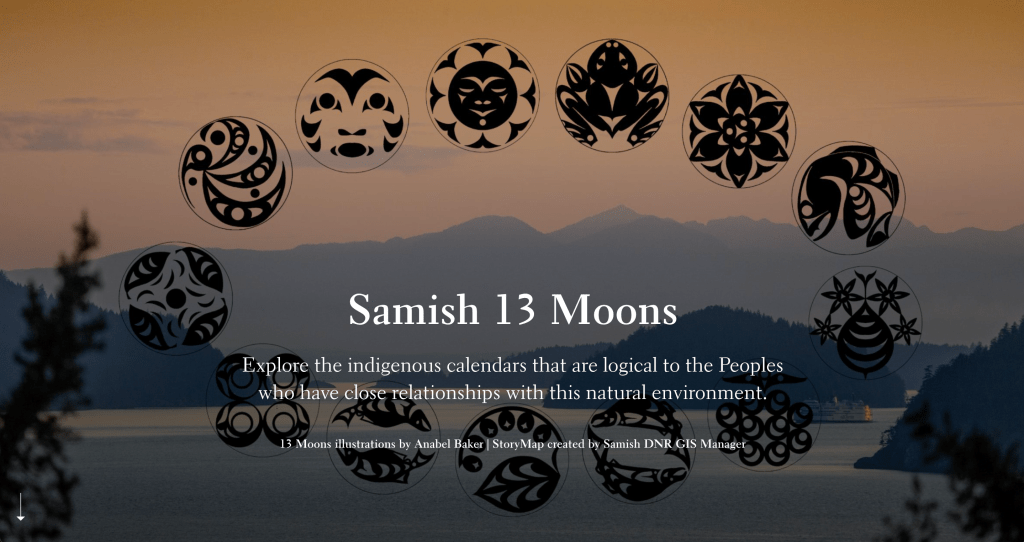
Samish 13 Moons: A PNW Seasonal Round
As we begin this project I am finding more valuable information about how Indigenous nations in this region have marked the seasons here forever. This knowledge was threatened as part of colonial erasure, and we’re lucky as settlers to have access to it.
The Samish Indian Nation put together this incredible StoryMap about the 13-moon Samish seasonal cycle. I’ll be referring to this and other Seasonal Rounds throughout the project—please check it out!
Seasons of Seattle: Eight Waypoints
November 5 – Mid-Autumn / Samhain / Halloween time – Midpoint between the Autumn Equinox and the Winter Solstice, marking the apex of autumn. This time of the year is fun, spooky, chilly, and fallish, and is a time for noting death and decay.
December 21 – Winter Solstice / Yule – Shortest day of the year marking the onset of winter. This is the darkest part of the year and defined by all the traditional winter light festivals.
February 3 – Midwinter / Imbolc – Midpoint between the Winter Solstice and Spring Equinox, marking the apex of winter. This time of year just absolutely sucks shit—it’s depressing, gray, cold and rainy as hell. But Mark Green refers to this holiday as the Brightening, because the days are lengthening.
March 20 – Spring Equinox / Ostara – Marks the beginning of spring. This coincides with traditional spring renewal festivals like Easter, Passover, and Nowruz. Green things begin growing and waking up, and there are many rebirth and fertility emblems like eggs.
Early May – Mid-Spring / Beltaine
Late July – Summer Solstice
Early August – Midsummer
Late September – Autumn Equinox
 Seasons of Seattle